The Indepentent has published an interesting article talking about the psychoacoustics of non-linear horror sounds and music creations. Let’s read:
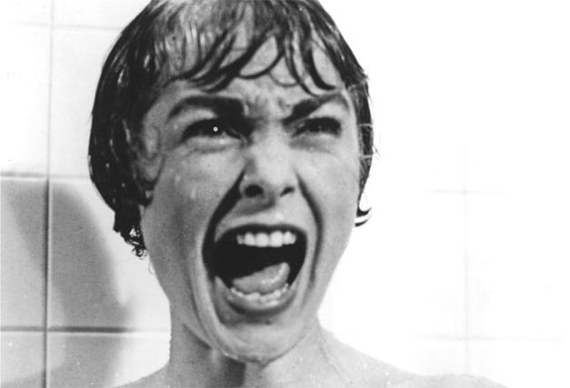
It is probably the most scary scene in cinematic history. The shower curtain is drawn back and actress Janet Leigh lets out a spine-chilling scream that warps into a frenzied cacophony of staccato music as she confronts an unseen, dagger-wielding madman.
When Alfred Hitchcock put the soundtrack to his 1960 masterpiece Psycho he was almost certainly unaware that the discordant musical notes he was adding to the disturbing shower scene were in fact based on the sort of non-harmonic sounds used in the distress calls of wild animals.
Scientists have found that many of the emotionally-evocative moments in some of the most popular films are enhanced with a sound score that exploits the human brain’s natural aversion to the “non-linear” sounds widely used in the animal kingdom to express fear and distress.
Via: @noisejockey
Great article! It teaches us (at a deeper level) something that we already knew. I never thought of why this technique worked, but this kind of information makes it more of a true tool, then just a trick.
I find it interesting that while volume past the point of control is required to produce the non-linear color of these sounds, it is not required to elicit the desired emotional response. A soft scream (or other non-linear sound) in the distance is all that is required to produce the response because its the timbre that tells the audience to feel uneasy, not the volume. It’s also interesting that sound designers have been using this psycho-acoustic principle to their advantage since the 30’s even though this article was published only recently.
would anyone know where I could get a sample of a on linear sound on its own, i.e. not embedded within a piece of music, for a psychology seminar?